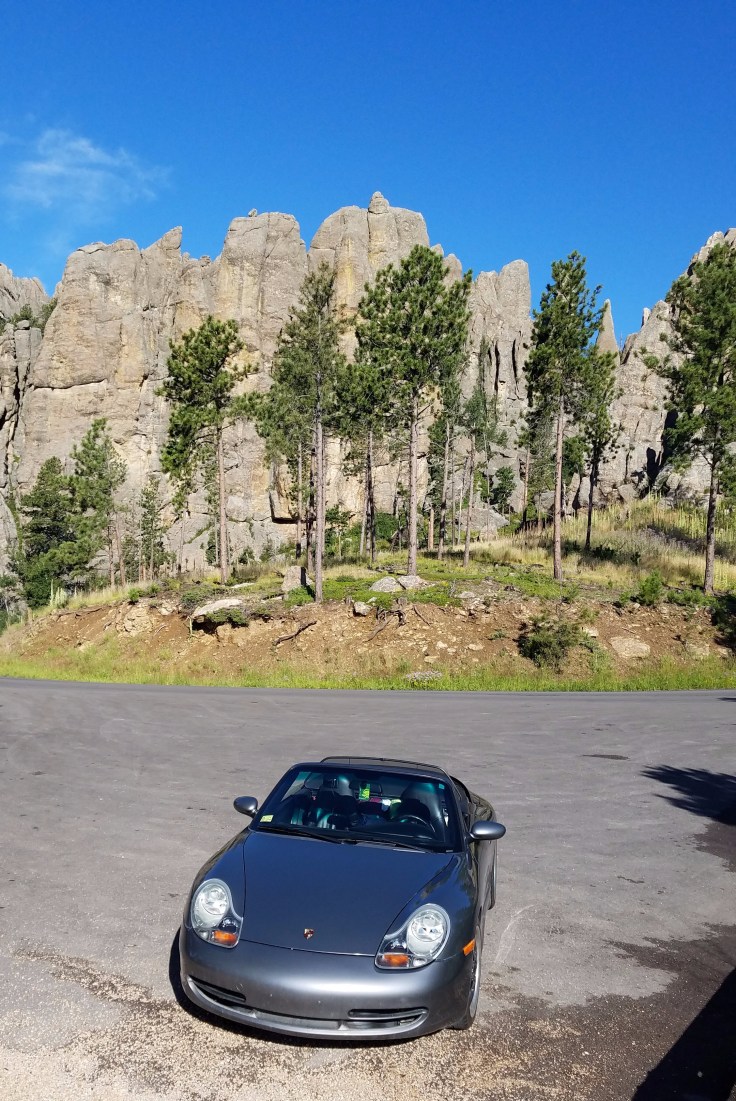
 For 45 years I dreamed of owning a Porsche 911. What you should read between the lines is that I could never justify the purchase and usually not afford one. With the cost of a used Porsche 996 version hovering around the cost of a new Ford Focus, I finally had the opportunity to fulfill a dream. My wife was agreeable since we were celebrating 25 years of marriage and she knew how long I had wanted one.
The 2001 Carrera 4 Cabriolet (convertible) I found from a dealer in Chicago had both the soft and hard top. With a home in the country, having another vehicle that can get through snow is important, so a third “play car” needed the ability to serve us if something happened to one of our daily vehicles. A 911 with all-wheel drive and a winter friendly hard top was non-negotiable.
My son and I flew out and drove the car the 400 miles home on Black Friday of 2016. I had the chance to enjoy it a few times before the snow flew, but only very short trips to work and back. Once it flurried, the car took the coveted garage space my truck had possessed. With the new cover carefully secured, the car and I both waited for spring.
During the winter I visited the forums learning more about my purchase and what I might expect. I also began to float the idea of a two-week Porsche camping adventure to my wife for our 25th anniversary.
In my internet search for “How to camp out of a Porsche 911,” I was disappointed to find only a handful of people who had ever written about it. All who had done so owned coupes, which allowed them to strap bicycles and sometimes even hard carriers to the roof. This was not an option with our convertible so I took careful measurements and began test-packing to see how my current backpacking/kayaking gear would fit. While much of my old gear would work I found to my surprise that my kayak has more volume than the “Frunk” (front trunk) of my Porsche. I figured with the back seat, I could accommodate the rest. This was a bad assumption because if you use the wind deflector (like I do) when the top is down, it means that the rear seats must remain folded down. Unlike a normal car, Porsche 911 seats do not fold flat against the bottom cushion. They fold halfway against the transmission hump, giving you about 7” of space below the folded seat and 10” of height on top of the seat before the bottom edge of the wind deflector. The seats themselves are not deep, meaning skillful packing is essential.
As I wrote previously, as I have aged I appreciate comfort. What this means for me is a thick mattress to sleep upon and a real chair to sit in. In the test packing of the Porsche, our good backpacking sleeping pads proved far too big and my camping chair that fit in my kayak was also too large for the backseat. After some shopping, I found a mattress and chairs that would fit in the car and do the job.
The trip taught us a lot and had some great Porsche lessons:
Lesson One – Think like a Minimalist. You have a small space to fill with gear and that means choices. Every choice is a trade for something else, so make sure you know what you can and can’t live without. Here is an example: Shoes take a lot of space. My wife brought four pairs and I brought three. When we do it again the same shoes will be going along because they proved essential. In our case they were: Hiking boots, tennis shoes, sandals and water shoes. Combined, they took up over 2 square feet of space. That’s a lot in a Porsche 911. The good news is they don’t have to pack together and can squish or fill in spaces.
 Lesson two – You save money traveling in a Porsche. I know it sounds odd, but hear me out. You know that souvenir you couldn’t live without? Yes, you can and you will because it won’t fit in the car. Sure, you could ship it home, but my wife and I made an agreement before we left that it needed to be very special if we were going to buy it and ship it and nothing proved that dear to us. One of the things both my wife and I learned from this trip is that less is more. The things we brought we used and cleaned often to use again.
Gas also proved to be a money saver we hadn’t expected. We are used to driving a large F150 Ford pickup. Even though my truck is a deluxe model, the Porsche is much more comfortable and less expensive to drive.
Lesson three – Be comfortable with people staring at you. As we drove through the campground the first day looking for our site, two little girls stared at us with a look like “What the heck?” It didn’t change elsewhere. You get a lot of positive head nods and often people are curious and want to visit, so the car becomes a real ice breaker.
Lesson four – You feel safe driving a Porsche. These are small and safe cars. On winding roads, the car sticks to the road providing you with a feeling of added security. The ability to quickly maneuver means you can avoid many obstacles others will hit and on the open road in places like Montana where the speed limit is 80, your car is just humming while others are panting. I found that my car hummed a happy tune at 85 and loved that as a cruising speed. It added comfort for me to know my tires were designed to go much faster, and my brakes were the best of any car on the road. I knew we were safe as long as I drove sensibly.
Lesson five – You don’t need to suffer, but you do need to plan. Comfort comes at the cost of space. Our tent was a little smaller than I would have liked, but the bug screen tent we brought proved to be an evening life saver. If I had brought a bigger tent, then the bug screen would have been left behind. I hate bug spray and the residue it leaves on everything, so that was a comfort I was willing to accept at the cost of space. Think about how you camp and what you are willing to accept and not accept and plan accordingly. When planning, think backpacking size without the needed weight restrictions and you can bring more than you think.
Lesson six – Everything must be soft and squishable. There is no place for hard sided items (except a cooler). Suitcases need to become soft sided gym bags and items that can be squished and formed into tight spaces like down jackets become valued. My nemesis on this trip was a box of crackers. Yes, honest – a hard sided box of crackers caused me to curse under my breath each time I tried to find a place to put it. My mouth proved the best punishment for this particular item.
Lesson seven – Being small is wonderful. We found ourselves able to quickly pull into tight parking spaces in mountain pull offs that others had to pass by. This proved to be one of our favorite things about the car and allowed us to park for photos and hikes that we would have missed with our big truck.
Lesson eight – 63 to 79. This was for us the perfect temperature range to put the top down. I like breeze and my wife doesn’t enjoy it as much so if I was driving and closed my window, it gave me a nice breeze while mostly bypassing my wife. It was the opposite of what we thought but kept both of us happy. Both of us prefer fresh air to conditioned air, so the top was down as often as we could.
Lesson nine – Know your fuel. Before we left I called the local Porsche dealer to ask about any tips and what I should do if we broke down. The man I spoke with was a fuel expert who had tested fuels across the country on his drives and told me what brands to use and those to avoid. We didn’t have any fuel issues because of it and I was glad I had called ahead and learned what I needed to know.
Lesson ten – It’s hard to give up the driver’s seat. I have never owned a car I hated to share driving duty until now. You can read about the Porsche driving experience, but 4100+ miles gives you a true appreciation of what the “hoopla” is all about. I would do another 4100 tomorrow.
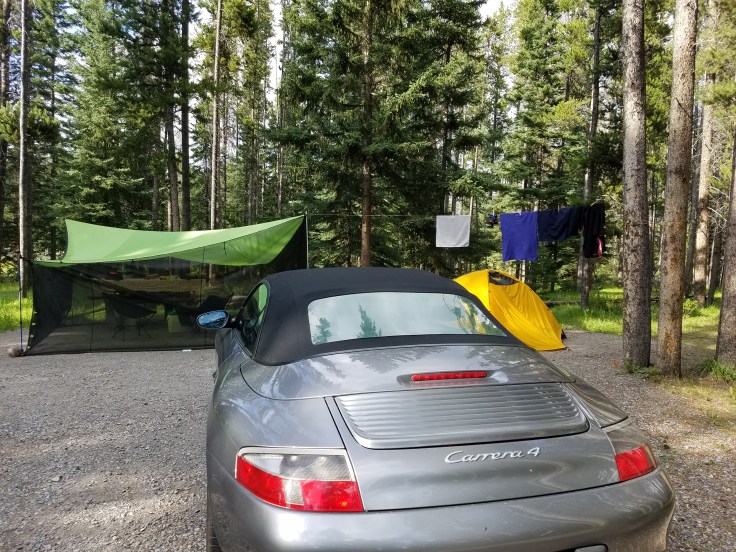 Some packing list essentials and my opinions.
RULE 1: If you are not an experienced camper, don’t use a Porsche as your test ground!
Nothing replaces good camping skills so if you are not a camper and considering doing this, please watch some online videos or read a book or two well before you go. REI and many State Parks give classes to encourage and develop camping skills. I still do research to hone my skills even though I have over 45 years of backpacking, bicycle & canoe camping and sea kayak touring experience. My gear was chosen for those pursuits over the years.
Smaller gear is typically more expensive because it is designed to be light weight. It is not designed as the best approach to do something in most cases, but rather as a smaller alternative. If at the end of this you are still interested in camping out of your 911 and don’t have this kind of gear ask a friend who you know has it and see if you can borrow or rent it from them. Many high-end outfitters rent quality gear and could outfit you perfectly. If you prefer owning your gear visit REI or another quality outfitter/retailer and speak to their experts. Bring your car along and demand a test pack before you actually buy anything! Always, Always, Always buy the smallest size that will work as your guide. A flat item is better than round, squishable is better than hard, etc. Good gear is expensive and worth it, don’t penny pinch. Most of the gear I own is 20+ years old – and has had plenty of use.
A personal note: I used to work for a high-end outfitter and many popular brands support the sales people with gear so that they will push it on customers. Just like with any hobby there are a lot of “gear heads” who love to talk the latest trends. Many of them have very little time outside actually using it. Look for the old guy or gal who looks like they would repair anything with duct tape and ask their opinion. As an example, the Eureka Timberline tent has been around at least 40 years and they still make it because it works great. (My 4 man Timberline was too big for the car or it would have made the trip) With that said, there is some better newer gear – My MSR stove cooks much better than my old technology Optimus Svea stove.
Don’t get sucked into gimmicks. Many years ago I bought a stove that I loved from Coleman but it used special gas bottles that only they produced for this product. They are now are impossible to find. Stick to the MSR type stoves that have become standard and you’ll be happier than buying the latest gimmick that becomes an expensive paperweight.
My point is: Don’t buy trends, buy on other’s experiences. Don’t just ask what gear the sales person has, ask where they personally have used it and what they like and don’t like. Look at reviews on Youtube or on websites. A dry tent, quality mattress, warm sleeping bag and reliable stove will make or break your trip.
Here is what we brought and my experience:
Tent – Eureka Apex XT. I have a secret – you need to divide in half the number of people any manufacturer claims a tent holds. I have used my Apex tent kayak camping for 15+ years and it is a great one person tent. They call it a “two man” but with two you have to cuddle. I am needing to replace my tent because it is now becoming duct tape supported and I will probably look for three man to replace it. The packed size is perfect for the frunk though so I will take that measurement as my requirement for any new one I consider. The Apex XT fits in the frunk perfectly and I highly recommend this tent if you don’t use the mattress I used.
Mattress / Pad – Intex – This was the hardest item to decide on and I am still looking for a better option. This statement could get me banished from the backpacking community, but I hate self-inflating backpacking mattresses because for me they just don’t give enough back support. Others swear by them, so it really is a personal preference. (If you are backpacker, don’t read this next part) I ended up buying one of those home inflatable mattresses you have for guests, an Intex, 4 inches thick, full-size air mattress with built-in electric pump. In my test, it fit the tent, but in field use, it stretched the Apex tent and proved bigger to store in the car than I had hoped.
Pros: The built in pump inflates the whole thing in less than 3 minutes. It is electric which means you need to bring an inverter. Make sure it is at least 300 watts. Mine stores next to the spare tire. Make sure you bring an extension cord which can fit inside the spare tire rim.
Cons: When inflated it made the sides of the tent taut. It is too tall for my tent and takes up a lot of space in the car. I would buy the full-size mattress again but in a 2” thick. Mine fits under the back folded seat but takes more room than I had hoped. Of all your decisions, this one should be your most thought out and carefully measured. Fits under back seat barely.
NOTE: I have many hiking sleeping pads and all required more car space than the air mattress.
Camp tarp and screen tent combo – Nemo Bugout 12×12. I stumbled upon this product by accident preparing for this trip and my wife and I now consider it essential camping equipment. It is a well-designed rain tarp that has built-in drop walls of bug screen. It zips closed and keeps bugs totally out. I hate biting bugs and they can ruin a trip, so this was awesome! They also make a 9×9 size which I think is big enough for most people and I would buy that size if I were to do it again. Get the poles, you’ll want them. Backseat fit only.
Sleeping bag – Didn’t use one. We actually brought a down comforter and put it in a compression sack. This gave us both ample covering and warmth at half the packing size of one traditional sleeping bag. Fits in backseat or frunk.
BBQ Grill – The Ecoque Grill – You could get away bringing a grill grate and putting it on top of the campfire ring and accomplish the same thing with much less space use. I am debating if I would bring it again. The Ecoque grill is a fully self-contained table top grill that folds to 3 inches thick. It uses only 9 charcoal briquettes so it is very efficient to cook upon. Fits in frunk.
Cooler – Oscar by Coleman. The main advantage of car camping over backpacking is the opportunity to have a cooler to keep fresh ingredients and cold beverages. Our “Oscar” by Coleman is an old cooler that fits perfectly in the frunk. I am sure you can find other coolers that would work as well, but measure carefully! This is the one item I personally demand to be hard sided. Coolers that leak or sweat suck and most soft sided do both. Fits in frunk.
Stove and Cook Set. I use an MSR style backpacking stove and this along with backpacking sized boiling pots work great. If you outfit yourself like any good backpacker cooking for two would, you should be fine. I have a 5-gallon clear dry bag that I put dry food that works great. Clear is the best choice so you can see what you have and grab it easily. Fits in frunk.
Chairs. Ahh, chairs. After a day of hiking, nothing beats a comfortable chair! I had borrowed a chair from a friend to see how it fit in the car and while the packed size was perfect, the chair itself seemed fragile. The design was right, so we bought the sturdier version from REI called the Flexlight Macro Chair. My wife liked it so much she got one for herself before we left. Both chairs fit in frunk.
What else did we bring?
IPad (for photo taking)
Camera
Charge cords
Solar charger
Hiking staffs
Clothing for the conditions. (Warm to cold mountain night down jackets)
Collapsible water bottles
Head lamps
There are only two items we did not use on the entire trip! A deck of cards and my camp axe. I would bring both again though.
Our trip broken down
Leg one – Getting a feel for distance. We started near Minneapolis and drove to Medora, North Dakota (590 miles) and found the car much more comfortable for touring than either of us expected. The seats support well and passing is a joy. Our destination was Theodore Roosevelt National Park where we were hosted by the Theodore Roosevelt Medora Foundation to attend the 4th “Gathering of TR’s”. My friends and I who portray TR meet there annually to sharpen our skills and share stories and ideas. I am sure my fellow TR’s wondered why I was zipping around this important Roosevelt footprint in a fancy German sports car, but hopefully, they will read this and understand! Unpacking the car for our hotel room overnights meant we didn’t have to disturb any camping gear in the Frunk. Repacking proved to be much more difficult and required some terse words until I figured out that the item that was causing all the trouble was supposed to go “under the back seat”, not above it.
 Leg two, the open road. We bid our farewells and drove to Haver, Montana (370 miles) where we started finding nuances of the car, like if we hit the window button with one quick “tap”, it would go all the way up or down. The drive was fun, with a mix of interstate and back roads which allowed us to stretch the car out a bit. Along the way, we saw many bicycling tourists with full packs peddling hard. With so many on the road, we were careful to give them wide berth, which slowed our progress at times but also made us appreciate that adventure can be interpreted and appreciated in many ways.
Leg three, exploring the speed. After an overnight in Haver, we ventured straight north to the Canadian Border on our way to Canmore, Alberta. (388 miles) The Border agents were friendly and asked the usual questions about our visit and what we might be carrying. I wasn’t worried if they decided to search us as we are mostly law abiding, but the concept of unpacking and repacking at that time would have created an International incident. They were very nice and sent us on our way and encouraged places to visit.
The road was open, straight and desolate – you could see for miles. We patted our detector and opened it up to experience what the car felt like at speed.
Not far from the Canadian border is the town of Elkwater Alberta. It is inside the Cypress Hills Interprovincial Park and was a hidden treasure on our adventure. It was stunning scenery and I would have planned to stay there rather than Haver if we had known about it.
Not much long after we made the connection to the Trans-Canada highway. We drove with the flow of traffic to avoid any unneeded violations and to get a sense of the Canadian “Interstate”. We reached Canmore in mid-afternoon but could not see the mountains. The mountains are right next to the town but they were hidden by a thick cloud of smoke from nearby forest fires. When we got up the next morning, our little car was covered in a fine dust of ashes.
Leg four, mountain driving. The smoke had abated some and the drive from Canmore to Banff is short and beautiful. (28 KM) As you climb into Banff, you begin to find the roads that make driving a Porsche special. Curves become a place to feel the tires grab. I compare it to downhill skiing, where you find your groove and carve down the mountain. The feeling was the same to me when we found a winding road.
We spent many days in Banff driving and hiking, adding miles to the car as we explored this amazing area. When the camper in front of us was too slow, a gentle push of the throttle propelled us safely past in quick time.
As we progressed, we found that distance driving was no longer the chore it had been in the past, it was part of the adventure and a welcome one.
Leg five, Bumpy roads. Banff to Waterton National Park (361 KM) included many miles of road repairs and taught us a valuable lesson on carefully watching the road. The low profile tires are great for smooth roads and cornering, but when you hit a rough road, they can cause the wheel to dance in your hand and make the ride unsettling.
Leg six, painfully slow. The road from Waterton NP, Alberta to West Glacier, Montana (124 KM) sends you across the famous “Going-to-the-sun” road that climbs the mountains in Glacier National Park. This would be dream Porsche driving. Due to traffic and conditions, you get a nice feel for the switchbacks and sharp turns and still have fun, and with all the people you wouldn’t and shouldn’t performance drive this. Better to enjoy the amazing views and take your time while you fantasize how amazing it would be at speed.
Leg seven, backroads fun. Glacier NP, Montana to Yellowstone NP, Wyoming (390 miles) was a surprising drive of back roads and mountains. With the top down, we soaked up the sun as we enjoyed the amazing scenery and winding mountain roads. Once on the Interstate we cruised along with a few rabbits ahead of us and the Escort alerting us to any issues we might face.
Leg eight, the fun of switchbacks. Yellowstone NP Wyoming to Custer State Park, South Dakota (418 miles) Both Yellowstone NP and Custer State Park have wonderful hill climbs and switchbacks which are a joy to drive. You can play with the car even at low speed and enjoy the responsive driving experience. The needles highway in the Black Hills of South Dakota is a must drive for any Porsche enthusiast. Along with amazing scenery are a few 10 mph switchbacks that will have you smiling from ear to ear.
Leg nine – Being the rabbit. Beep. Beep. Beep. Slow down, look for him. Yep there he is. The radar detector is a god send on long trips and being the leader or trading it with someone else is great fun. The leader is called the rabbit and the rest of us are turtles. Rabbist risk taking the speeding ticket for the benefit of the turtles. We traded off following the rabbits and being the rabbit as we cruised back home. The drive was long (566 miles) and flat, but traffic was as eager to get home as we were, so the car was able to punch some good speeds as we made it back.
The final analysis
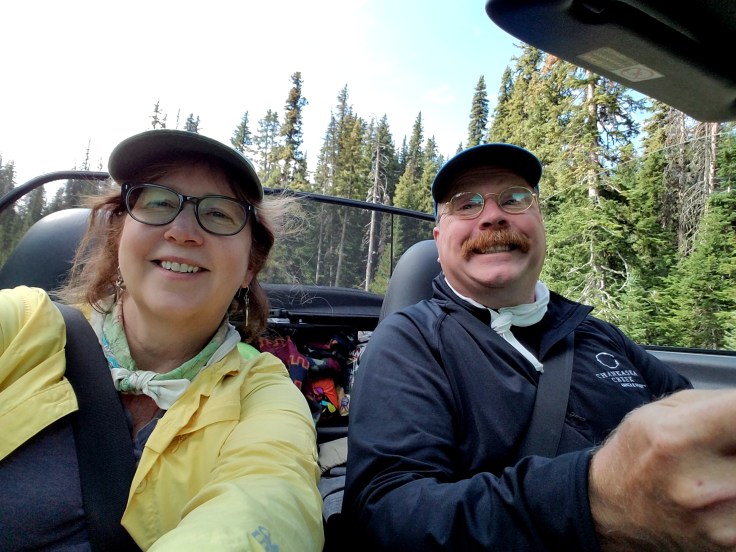
When our son was little we decided to buy a motorhome (It was one of 4 times I went to buy a Porsche and came home with something more practical). My wife at the end of this trip said: “I liked this so much more than the Motorhome, where should we go next?”
What more analysis do you need?




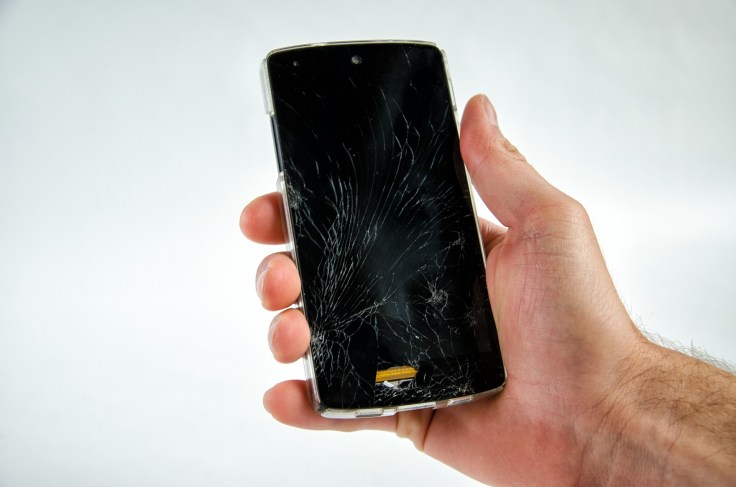 I have learned that my smart phone is great for some things. As a camera it is amazing and even my good SLR camera is now looking like a dinosaur compared to it. I enjoy applications that tell me what others experienced when they visited an attraction I think looks interesting. Podcasts that can entertain me through my car speakers has become a favorite past time as I travel the back roads on the way to my next gig. The app that gets me across Washington DC on the metro has probably saved my life many times, or at kept least from ending up in another state. My smart phone does have some valuable attributes.
 From what I have written here you might suspect that I am an extrovert, but those who know me well can tell you that I could easily live a Thoreau like life in a cabin in the woods, reading and writing in quiet solitude. I have learned to engage an “extrovert” switch each time I am interviewed or go on stage. Apparently, this is not uncommon, as I have heard of many entertainers who are great in a crowd can be somewhat awkward when you meet them one-on-one.
 Before we left for our vacation, we had arranged for a friend to stay at our home to keep our cat company and the home occupied. One of the things we have learned living in the country is that people who live in cities love to visit us for the peace and quiet. One time, my twin brother-in-laws and I were sitting on our deck drinking a beer when they asked in unison ”What is all that racket?” – “Frogs” I happily replied.


 Adventure is a personal term. For some, just leaving their town to the one next door might be classified as one. I thought my wife and I were on a great adventure. As we travel and speak to others, ours is only a shooting star in a galaxy of adventures. At rest stops we speak to those like us who are taking a few weeks to explore our great country through their windshields and hiking boots. We share camping tips, places to see and things to explore as they travel the direction from which we came and vice versa.
 This past weekend I enjoyed working for the Army Corp of Engineers in far southern Illinois, almost 600 miles from my home. My work provides me with the opportunity to be a road warrior from time to time and these long trips are often taken on the roads I usually loath: Interstates. I understand the importance of them. Many years ago my lovely wife and I were run off the road on the Interstate by another car as they day-dreamed-drove. It was by excellent driving skills of my wife and a large degree of luck that I am here to write about it. As the years have gone by, I have realized it’s an easy thing to do on the Interstate. The benefit of the Interstate is speed. The negative of the Interstate is monotony, with a drive broken up only by the occasional billboard or promised rest area sign, or the dreaded gasoline stop you are forced to make as you try desperately to get from point A to B in the allotted Mapquest calculation.
 The Mirror has two faces