

In this blog I have highlighted some issues I have experienced with my own desire for retirement and some observations on how to get there realistically. I think there is hope on the horizon.
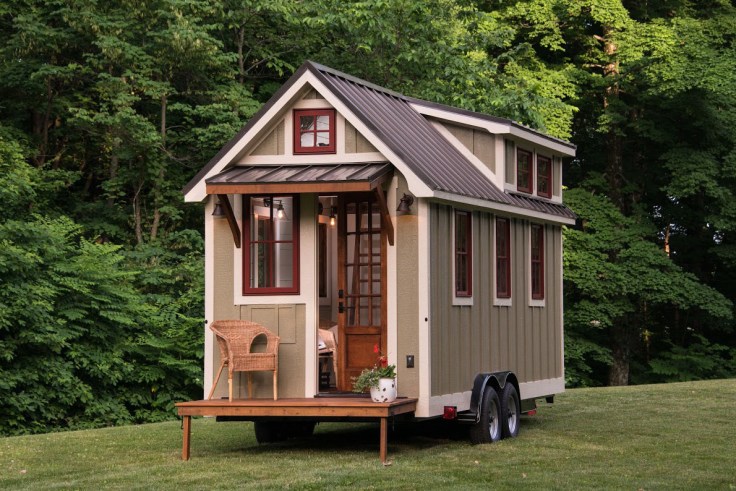
For many years, I have been following the “Tiny house Movement”. I like the idea because it forces people to dispense with their “wants” and forces them to live within their “needs”. To understand what I mean, consider this: The average new home built today is over 2300 square feet, while a Tiny Home is defined as being under 500 square feet. Imagine taking your life and cutting it into a 1/5 and living within that parameter. In that amount of space, you choose wisely what is needed, because you don’t have any space for anything else. The Tiny House has more than internal space challenges however, it fights many external space challenges as well.
America is considered to be the “Land of the Free”, until you have the bold audacity to break from the norm and suggest a new way to think. Tiny Homes could be embraced as a great housing solution for those who want to live within their means and frugally, yet the major issue with Tiny Homes has been local zoning laws that require structures meet minimum size requirements. A 1000 square foot house was normal in the 1950’s but sitting beside a Tiny Home it looks like a Mansion. Communities with “McMansions” don’t want a Tiny home on the lot next door for the same reason and have made it clear to Tiny Home owners they will not tolerate them because they will erode their property values. I can understand this, but I also know that many of those McMansion owners would probably learn more from that tiny home owner about living a purposeful life than from their neighbor who looks like they have achieved everything and has a banker calling them daily to remind them they still need to pay for it.
I don’t believe that Tiny Homes are a fad as some do. Living small is normal in Europe, and in the U.S., more and more people are moving to urban settings which are usually smaller than their suburban counterparts. IKEA has shown that there demand for smaller sized, utilitarian products that are less expensive. Large retail is being replaced by smaller, craftsman type retailers. American Society is shifting slowly from the “Everything BIG” to a more livable functional space. this is occurring very slowly, and mostly by younger generations who have seen the burden of their parents need-more-stuff lifestyle.
Space saving and frugality is evident in our work lives as well. Many jobs are now mostly computer based. This creates the ability for work to be mobile through the internet. Go to any coffee shop in a major city and you will see the new American office, a two-foot by two-foot area with a laptop computer and a good cup of coffee. Smaller, efficient (your rent is a coffee) and probably more productive because on Monday morning you aren’t comparing weekends with your coworkers.
This brings me hope that as people think smaller, community can become bigger. In some Tiny Home communities, they have built common areas for gathering, cooking and socializing. You can’t have a party for 10 in most Tiny Homes, so community spaces, restaurants and parks become the community area. Bringing people together because of the shared smallness is perhaps the next big trend that the U.S. could enjoy. Frankly, I think that would be a good thing.
 The Mirror has two faces
Leave a comment