

I am at the age now I consider to be the most difficult of my life. I am looking ahead 10 years and I am fearful of retirement. I am not fearful of the experience. Everyone I know who is retired loves it.
People I know, who are like me, are fearful of retirement because of the unknowns. Where will I live? How can I support my lifestyle? Will I run out of money? What if I…….? I have friends who continue to work because of the costs of health insurance once out of the workforce. Fear, fear and more fear.
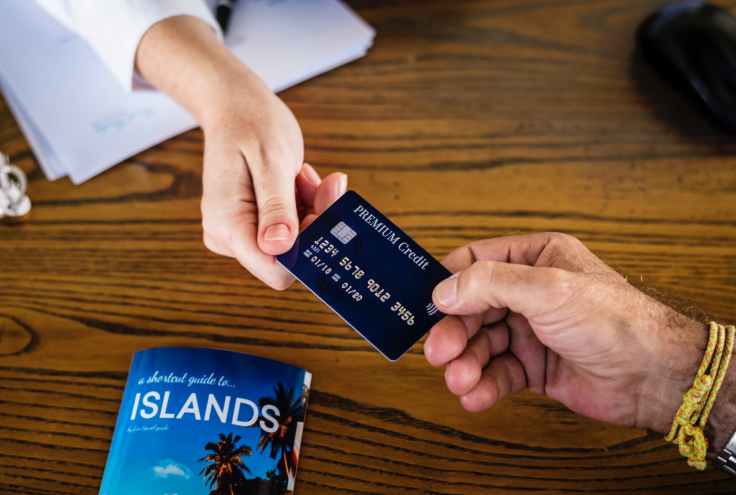
The U.S Government has tried to quell my fears by designing a “retirement system” that targets my “get out of job jail” age at 67 years old if I wish to take advantage of all of the benefits. That retirement number seems to creep up each year as the Social Security fund decreases. As someone who frankly doesn’t want to work in a traditional sense until age 67, I hope I can impart some wisdom on how I would have done things differently if I had known what I know now as I am doing my retirement planning for the closer, but still distant, future. This is a road guide for those my son’s age or those who can perhaps turn their own ship by thinking differently:
- Live well below your means. I am impressed with my son’s generation in their belief of experience over stuff. But experiences can be very expensive too. A $7 pint of beer at the local craft brewery should be an appreciated luxury and not a daily occurrence, especially if you started the day with a $5 latte. $12 may not sound like much until you do the math to figure out if you did it every day, that’s $4380 per year in just beverages. That’s 10% of your income if you make $43,000 per year!
- Be educated, not edu-poor. I think a college degree should be obtained when you truly desire a job that requires it. I also support the idea that jobs with that requirement should pay accordingly. Pursuing a Master’s Degree for a role that pays almost the same as minimum wage should never ever be pursued if it means going into debt to do it. I appreciate socially responsible careers but if you will be paying student loans for 20 years to do so, it is not a personally responsible move on your part and you need to weigh all of your options. Don’t give up your career dream, just think of better ways to accomplish the outcome without sacrificing your future finances to do it. Also, don’t listen to a culture that shames you into college if it isn’t your fit. Don’t be afraid to explore the trades and work a job that usually pays better for often more freedom than corporate America. You should do what makes you happy and fulfills you, not society’s idea of what you should do.
- Buy a small, affordable home or duplex. The only long-term debt I recommend is a home. A small home in a safe neighborhood. You need someplace to live, and home ownership is usually cheaper than rent (BUT NOT ALWAYS!) You will make about 3% on the investment long term and there are some other savings, such as lower car insurance, etc. that you get from being a home owner. You can rent out rooms and cover your monthly costs, meaning you can live close to “rent” free or actually make money.
- Pay yourself first. Each month put money into YOU accounts. Create savings accounts, investment accounts, travel accounts, fun accounts and budget money into each. Pay those bills first. The leftover is your monthly budget for everything else. You will quickly see where your money goes, and how much you will need to live on (and how much is wasted).
- Stop thinking everyone else makes more money than you. It’s usually not true, but it can sure feel that way. When friends are posting online their fancy restaurant visits, weekend get-a way’s and new boats and cars, it doesn’t take long to feel poor. Looking rich but being poor because of debt is self inflicted and avoidable. Expenses that are financed monthly payments to a bank are stressful and honestly something I would happily take back from my youth as foolish self-gratitude. Be happy being debt free and consider that wealth. (Because it really, really is – net worth is calculated as what you have left when you subtract what you owe)
- Build passive income streams. Rental property is a great passive investment that pay’s you every month (if you bought it correctly). Is it work to own rental property? Yes, but much less than a 40 hour a week job. It doesn’t pay as much because it isn’t a 40 hour per week job – that’s why it is called passive. When you retire, you will need income streams – the more you have the better your retirement. Retirement implies that you will not be working, so where will your income come from? The easiest will be passive income: Your 401k, your ROTH, savings and other passive money coming to you that isn’t a job. Investing early gives you freedom to retire early.
- Don’t put all of your retirement money in 401k’s and Roth retirement funds. (I didn’t say don’t put money in them!) Income streams outside of retirement plans means you can retire earlier. I can’t touch the money inside of my retirement plans until I am at least 59 1/2 because my money isn’t mine without penalty. Have money in investments that pay you well before “retirement age”. Yes, you will have to pay taxes on it, so what? At least you have income! (You pay taxes on your income you “work for”, remember?)
- Pay cash for every car you ever own. I love cars, always have. But, If you can’t afford it, you weren’t meant to have it. Owning a cars is a huge expense most of us will always have. 99% of vehicles are a depreciating asset, meaning everyday you own it, it costs you money. Let’s say I lose 10% value of a car by owning it – would I be better off losing $4000 on $40,000, or $1000 on $10,000? Said another way, what could I do with $3000 more dollars per year ($250 a month) because I didn’t buy the $40,000 car? Your “Pay yourself first” fund is the place you will find the funds for your car, and believe me, once you work hard to save it, you’ll won’t buy as expensive of a car vs. when the bank financed it.
- Build a wealth of friendships. Why own a cabin when you have a friend with a cabin who loves when you visit? My grandfather visited friends all over the world during his retirement years and they loved him for it. I enjoy having guests visit and it doesn’t cost them anything but sharing good stories that make me laugh. In the end, it is the friendships that we make in life that give us wealth.
- Plan your life for a life of joy. The best things in life aren’t things. I personally believe they are a supportive spouse with a shared vision; children who live purposeful and happy lives; friends who you enjoy and enjoy you. Almost all that stuff you acquire along the way will lose monetary value, and in the end will be something you need to store someplace, dispose of (which you will have difficulty selling and nobody wants) and represent memories that are really only yours. There is an old saying in the natural conservation world that I think could easily be applied to our entire lives: Take only pictures, leave only footprints, save only memories.
These are some of the many life wisdom’s I would have imparted to a younger me. I hope you will share them with someone, along with your own tips.
 The Mirror has two faces
Leave a comment